Some days, gratitude journaling feels like being told to smile for a photograph you never agreed to. You're tired, or sad, or running on four hours' sleep and a slice of toast, and the prompt in front of you says: list five things you're grateful for. Nothing comes. Or something comes, and it feels like a lie.
That isn't a failure of character. It usually means the prompt is too big for the day. Gratitude writing works best when it's small enough to be true — the mug of tea, the bus arriving, the fact that the awkward phone call is finally over.
Why big gratitude can backfire on a hard day
When you write something you don't believe, the entry loses its authority. You learn, quietly, that journaling is a performance, and the next blank page becomes a stage you'd rather avoid. Vague declarations make it worse: "I am grateful for my health" is easy to argue with when you've spent the afternoon in a waiting room.
Specific is what sticks. Not I'm grateful for my friends, but Priya messaged at 4pm and didn't ask me a single question. Not I'm grateful for my home, but the radiator came on at 6.40 and I stood next to it until my hands stopped aching.
You can also write the hard thing and the good thing in the same entry. Gratitude doesn't require deleting the rest of the day.
Prompts for low, flat days
Flat is different from sad. Flat is the day where nothing is wrong, exactly, and nothing is quite right either. These prompts are built for that grey middle ground.
- What was slightly easier than I expected today? Not good — easier. The meeting finished early. The shop had the bread you wanted. The queue moved.
- Name three things you noticed with your senses in the last hour. Cold tap water. A car door. Rain on warm pavement. This one works when feelings are unavailable, because sensation usually isn't.
- Where did you get a moment of relief, however brief? Sitting down. Taking your shoes off. A message from someone who didn't need anything from you.
- What did you do today that you'd normally not count? Getting dressed. Eating something. Answering one email instead of ignoring it.
Prompts for grief and loss
Grief and gratitude are not opposites, but they don't sit neatly side by side either. There is no requirement to feel thankful for a loss, and no timetable for when memories stop hurting. What can help is writing towards the person rather than the feeling.
- One thing I miss about them today, and one thing I still carry with me.
- Something they would have found funny, or would have wanted to know about.
- A comfort that arrived from outside me: a text, a lift home, a meal left on the step.
- What I'd say if I had five more minutes, written as though they can hear it.
Keep entries short if that's all you have in you. Two lines on a hard anniversary is a complete piece of work. If your grief feels unmanageable, or it's been months and daily life still isn't functioning, speak to your GP or a bereavement service. Writing alongside proper support is useful; writing instead of it is not.
Prompts for stressful weeks
On a pressured week, gratitude usually means noticing where the pressure eased, not pretending it didn't exist.
- What did I get through today that I'd rather not repeat? Surviving something counts as an achievement, even when it wasn't elegant.
- Which task took less time or energy than I feared? We tend to remember the things that went wrong and forget the eleven that went fine.
- What is already handled? Done, decided, or genuinely out of your hands. Name it so your brain can stop rehearsing it.
- What can come off tomorrow's list, and who needs to know? A cancelled plan is sometimes the kindest thing you'll do all week.
When nothing feels good: use the sideways prompts
If your mood won't cooperate, stop asking it to. These prompts don't require you to feel anything in particular.
- Describe one physical comfort in detail. The weight of a blanket, the first mouthful of tea, hot water on cold shoulders. Two sentences is plenty.
- What is the same today as yesterday? The same mug, the same walk, the same song on the radio. Sameness reads as steadiness when you're wobbling.
- What did you do that future-you will be glad about? Charged the phone. Put the bins out. Wrote the appointment down instead of trusting your memory.
- What did you notice outdoors, even for ten seconds? Wind, a cat on a wall, the fact that it's still light at half five.
Four rules that keep difficult-day entries honest
- One sentence counts. A complete entry can read: "Today was hard. The cat sat on me for twenty minutes."
- Use your own words. If "blessed" or "abundant" isn't how you talk, don't write it. Borrowed language reads as false, and you'll feel it when you reread.
- Put the difficult thing on the page too. "Also" is one of the most useful words in a journal: Today was grim. Also, the soup was good.
- Don't grade it. No streaks, no minimum word count, no comparing entries. A messy line on a bad day beats a perfect page you never wrote.
A ten-minute practice for a bad day
Set a timer for ten minutes. Write the date, then one line describing how today actually is — no editing, no softening. Choose one prompt from this page, not four, and answer it in two or three ordinary sentences. Finish by naming one small good thing you noticed, even if it's that the kettle boiled quickly. Then close the notebook without rereading it for insight.
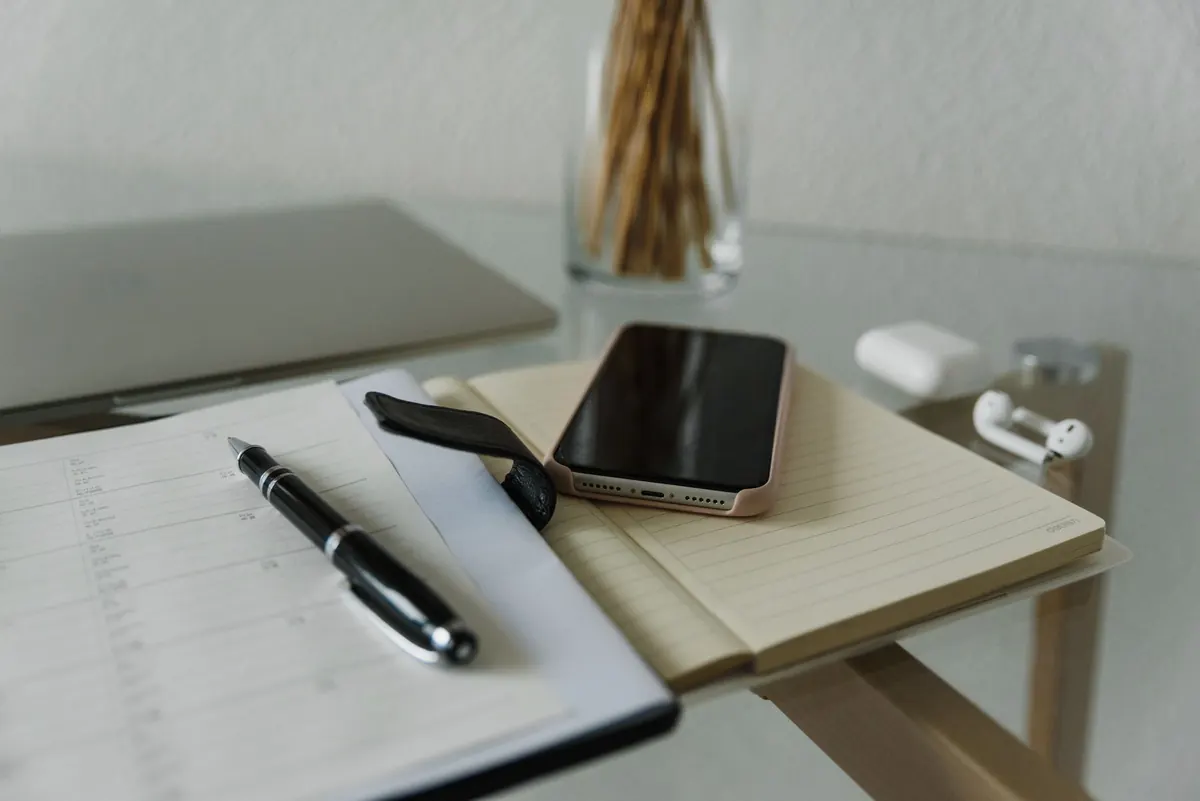
It also helps to keep a running note on your phone titled something plain like "small goods". Add to it whenever something occurs to you — a decent sandwich, a parking space, someone holding a door. On a bad day you don't have to generate anything; you just copy one line across to the page and sit with it.
Once a week is enough. Daily gratitude can become another task to fail at, particularly if you're already stretched, so pick a low-pressure slot — Sunday evening, or the ten minutes before you put the light out. If low mood, anxiety or exhaustion has been hanging around for weeks rather than days, treat the journal as a small companion rather than a cure, and talk to your GP about what's going on.
Photo: arynto / Pexels